
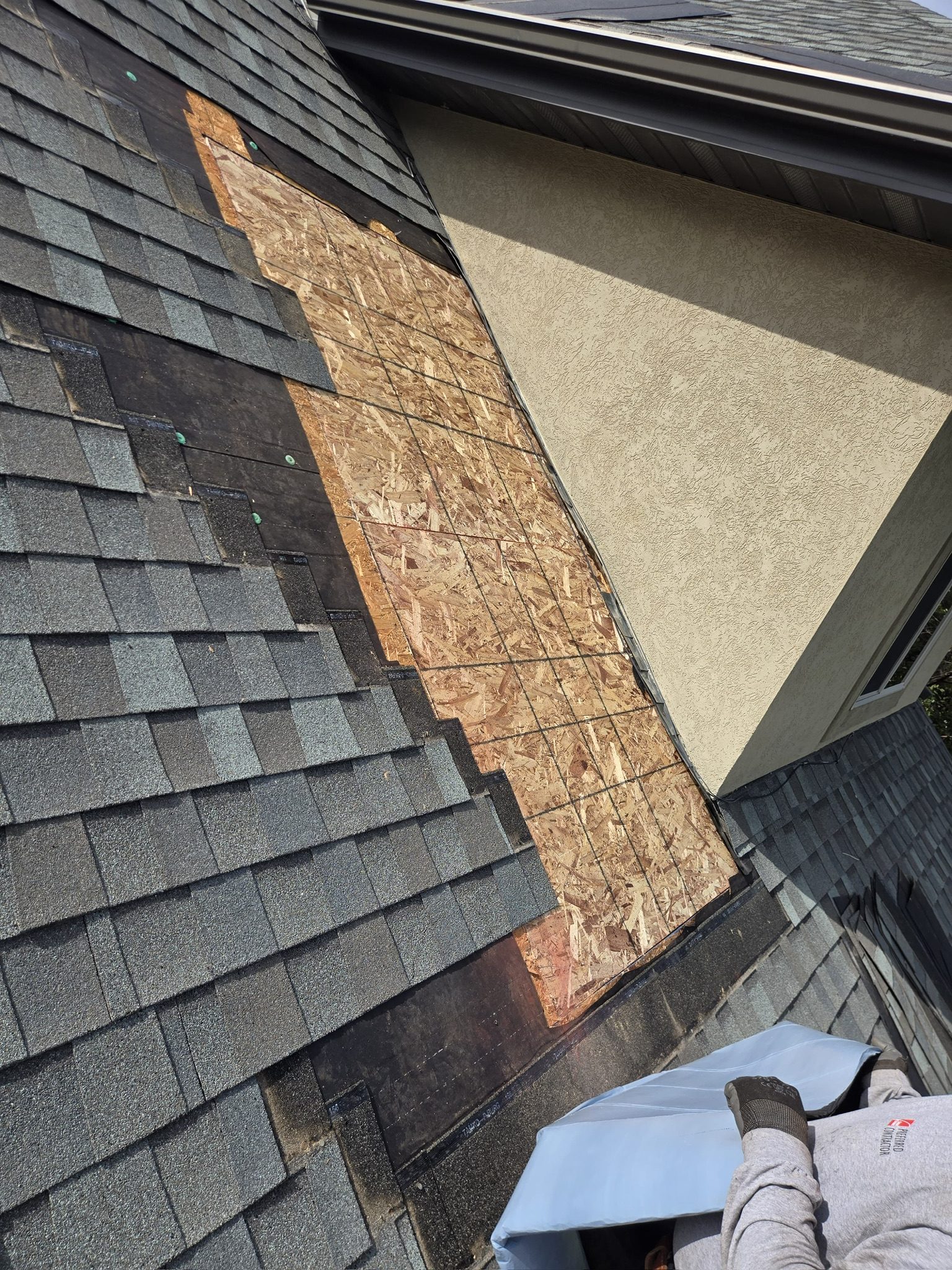
Water rarely enters where it shows up. We trace it back to the actual entry point — usually flashing, a penetration or a failed valley — and stop it there.
Water rarely enters where it shows up
A stain on a bedroom ceiling is the end of the journey, not the start of it. Water gets in at a failure, runs along the underside of the deck or down a rafter, and drops through at the first low point. Finding the entry is most of the job.
The usual suspects
Chimney and skylight flashing, plumbing vent boots that have gone brittle in the sun, wall abutments where a roof meets a second story, valleys, and ice dams. In older Utah neighborhoods with mature trees, blocked valleys are near the top of the list.
Documenting it for your insurer
If the interior damage is claimable, photographs taken before the repair are what make the claim straightforward. We take them as a matter of course.
- Leak tracing from entry point, not stain
- Chimney, skylight and vent flashing
- Valley and wall-abutment failures
- Ice dam damage and prevention
- Interior damage documented for your insurer
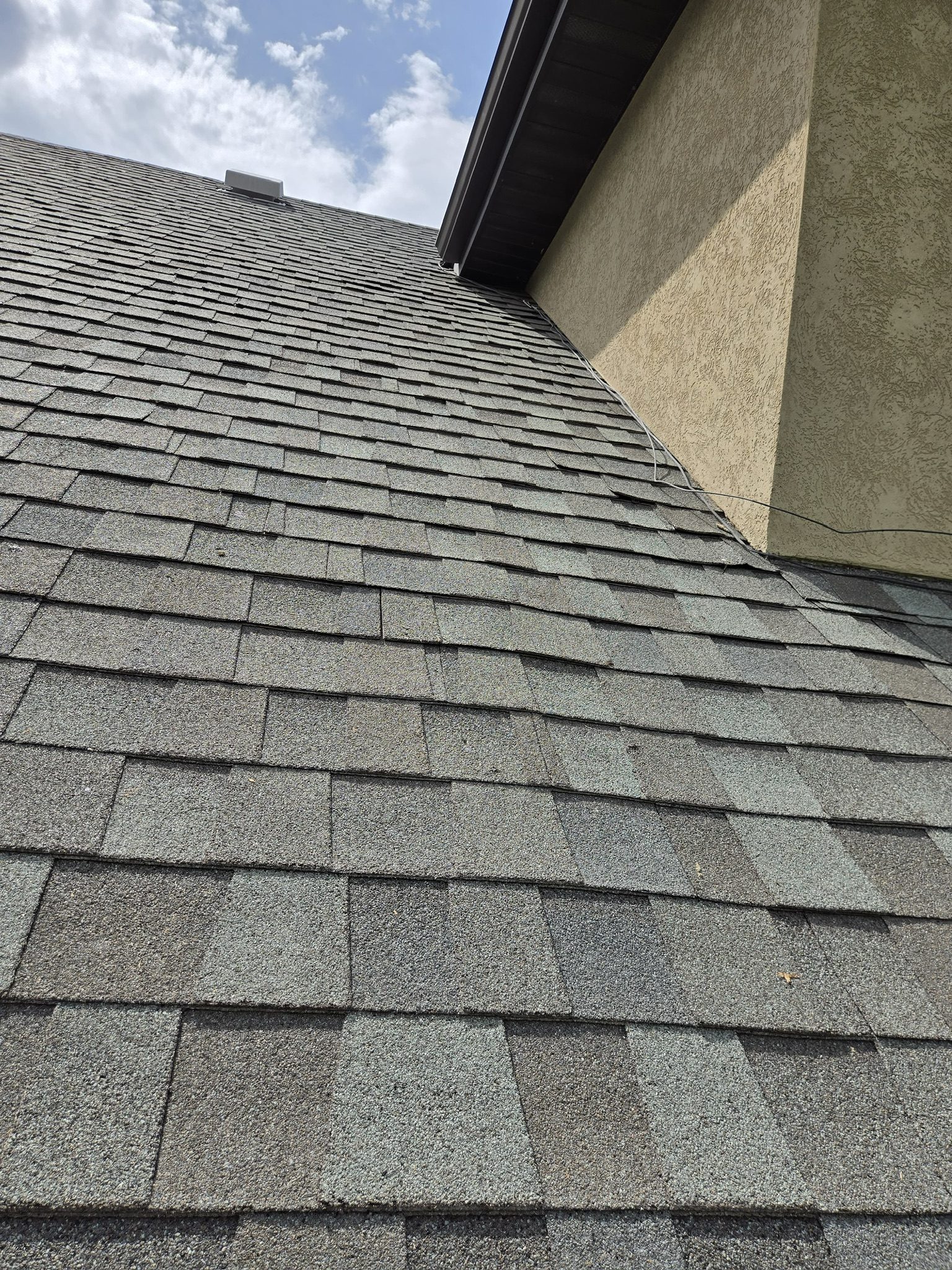
The Parts That Decide Whether It Lasts
Underlayment
Ice and water shield at the eaves and valleys, synthetic across the field.
Flashing
Walls, chimneys, skylights and vents. This is where roofs actually leak.
Ventilation
Balanced intake and exhaust, or the attic cooks the roof from underneath.
The deck
We look at what is under the old roof before we build on it.
About Roof Leak Repair
Can you find a leak you cannot see from inside?
Usually yes — that is what the attic inspection and water testing are for.
Should I get up there and look myself?
Please do not. More people are hurt on residential roofs than on almost any other part of a house, and a Utah roof in winter is genuinely dangerous. Call us.
While We Are Up There
Find Out What Your Roof Actually Needs.
We will look at it, photograph what we find, and tell you straight whether you need a roof this year or in five. No charge either way.